

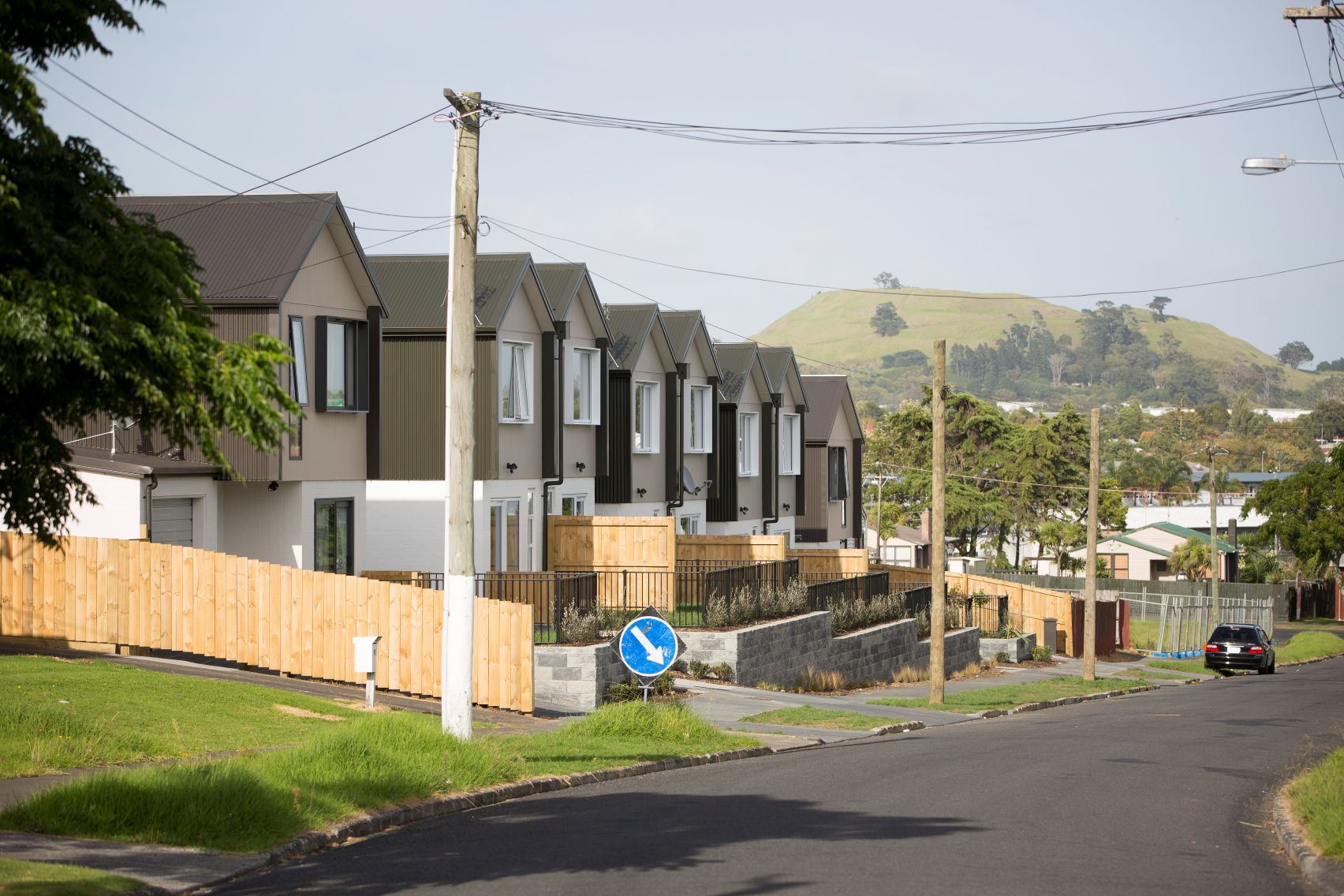
When you're saving for your first home, a 5% deposit sounds a lot more achievable than 20%. The First Home Loan already makes that possible for some Kiwis, provided your household income sits under Kāinga Ora's cap. National has promised to lift that income cap to $300,000 for everyone if it's re-elected on 7 November. Before you put your house-hunting plans on hold for an election promise, it pays to look at who qualifies today and what a 5% deposit will cost you every month.
What is the First Home Loan in NZ?
The First Home Loan lets eligible first-home buyers get on the ladder with a 5% deposit instead of the usual 20%. Participating banks and lenders issue the loan, and Kāinga Ora underwrites it. Because Kāinga Ora backs the loan, the bank can approve buyers who don't have a 20% deposit.
Not every bank offers First Home Loans. Right now the list includes ASB, Westpac, Kiwibank, The Co-operative Bank, SBS Bank, Unity, NBS and NZHL. Notice that ANZ and BNZ aren't on that list, so if you bank with one of them you'll need to look elsewhere to use the scheme.
First Home Loans are also exempt from the Reserve Bank's loan-to-value ratio (LVR) speed limits. Outside the scheme, banks can only allocate up to 25% of their new owner-occupier lending to buyers with less than a 20% deposit.
First Home Loan income cap: who qualifies today?
To qualify under today's rules, your taxable income over the past 12 months has to sit at or below these limits:
- $95,000 before tax if you're buying on your own with no dependants
- $150,000 before tax if you're buying on your own and have one or more dependants
- $150,000 before tax combined if two or more of you are buying together, regardless of how many dependants you have
You'll also need at least 5% of the purchase price saved up. That 5% can come from cash savings, your KiwiSaver first-home withdrawal, or a gift from family. You have to live in the home yourself, you can't own any other property or land (Māori land is excluded), and the section must be under 1 hectare.
Meeting Kāinga Ora's checklist is only half the job. Each bank still runs its own affordability check across your income, living costs, credit cards, Buy Now Pay Later accounts and student loan.
What would National's $300,000 cap change?
National's Backing First Home Buyers policy (announced on 6 September 2026) promises to raise the First Home Loan income cap to $300,000 across the board. That single $300,000 limit would apply whether you're buying solo or as a couple.
In its policy paper, National points to a junior doctor earning $100,000 on their own, or an electrician on $85,000 buying with a secondary teacher on $78,000 ($163,000 combined). Today, both get turned away at the door because they earn too much for the cap, even while struggling to save a $140,000 deposit in Auckland, Wellington or Christchurch. Under a $300,000 cap, both could apply.
Still, there are three things this policy won't change:
- It's an election promise, not current law. National has to win enough support on 7 November to form a government and then update Kāinga Ora's settings, and no start date has been announced.
- You still need at least a 5% deposit.
- You still have to pass the bank's servicing test. As National's own policy document puts it, the scheme lowers the deposit hurdle, not the income servicing test. The bank will still test your budget at a higher stress-test interest rate to make sure you can handle repayments.
What a 5% deposit really costs
Getting into a home with a 5% deposit gets you off the rental treadmill years earlier. The flip side is that you're borrowing 95% of the purchase price, plus the scheme's insurance fee on top.
Since Budget 2025, every First Home Loan borrower pays a Lenders Mortgage Insurance (LMI) premium of 1.2% of the loan amount to Kāinga Ora. Most buyers add that 1.2% fee onto the mortgage rather than paying it in cash at settlement, which means you also pay interest on the fee over the life of the loan. Your lender may charge a separate application fee too.
Let's run the numbers on a $700,000 first home. To keep the comparison clear, we've used an illustrative 5.00% interest rate over a 30-year term (this is an example for the maths, not a current bank rate):
- Buying with a 20% deposit ($140,000): You borrow $560,000 with no LMI fee. At an illustrative 5.00% over 30 years, your repayment is about $3,006 a month.
- Buying with a 5% First Home Loan deposit ($35,000): You borrow $665,000 before fees, plus the 1.2% LMI premium ($7,980) added to the loan, bringing your total mortgage to $672,980. At the same illustrative 5.00% over 30 years, your repayment is about $3,613 a month.
That's around $607 a month more on the 5% deposit loan. Over 30 years at that illustrative rate, the bigger loan and capitalised LMI fee add up to roughly $218,000 more in total repayments.
Now look at the other side of the ledger. If you're able to save $1,500 a month while renting, saving the extra $105,000 to reach a 20% deposit takes 70 months. That's nearly six years of paying someone else's mortgage in rent, and six years where house prices can shift away from you.
There's no universal right answer here. What matters is whether your household budget can comfortably carry that extra $607 a month, including if rates sit higher when you come to decide how long to fix your mortgage or if you ever face mortgage break fees.
Not sure whether you'd qualify under today's rules, or how the numbers look on your income? Our mortgage advice is fee-free. Book a free 15-minute consultation and we'll run through your income, deposit and lender options.
Should you wait for the election result?
If your income is over $95,000 (single) or $150,000 (couple), you can't apply for a Kāinga Ora First Home Loan today. Even if the cap is lifted after 7 November, changes like this take time to take effect. Rather than sitting on your hands, here are five things we'd check right now:
Check how your last 12 months of income is actually counted. Kāinga Ora looks at your taxable income over the past 12 months, not necessarily what your new salary letter says next month. If you're close to $95,000 or $150,000, or if overtime and bonuses pushed you over last year, get an adviser to check the exact figure before you rule yourself out.
Compare low-deposit options at the main banks outside the scheme. You don't have to go through Kāinga Ora to buy with less than a 20% deposit. Within the Reserve Bank's 25% LVR allowance, banks regularly lend to high-income first-home buyers who have a 10% deposit and strong cashflow, with no income cap at all.
Get your KiwiSaver first-home withdrawal lined up. Once you've been in KiwiSaver for at least three years, you can usually withdraw everything except $1,000 for your first home. Check your balance and make sure your fund matches your timeframe so a market dip right before settlement doesn't shrink your deposit.
Tidy up short-term debts and credit limits before a bank looks at your accounts. A $10,000 credit card limit or an Afterpay account cuts what a bank will lend you, even if your balance is zero. Closing unused limits and keeping three months of clean bank statements makes pre-approval much smoother.
Plan how you'd protect a 95% mortgage. Borrowing more means less buffer if one of you gets sick or can't work for a few months. Make sure your emergency fund and personal insurance match the size of the debt you're taking on.
How we can help
Our licensed mortgage advisers work with First Home Loan lenders as well as New Zealand's main banks. We'll check whether you qualify under today's Kāinga Ora rules, compare 5% and 10% deposit options outside the scheme, and put your application in front of the right lender. Our mortgage advice is fee-free, and when you're ready we can also help you sort out the insurance that protects your mortgage.
Get your first-home numbers sorted before 7 November
Whatever happens on election night, buying your first home comes down to the same three things: how much deposit you can pull together, what monthly repayment fits your life, and which lender will back you.
Want to find out whether you qualify for a First Home Loan today, or what a low-deposit loan would look like with another bank?
Let’s Make it Happen
15 minutes is all it takes. We’ll give you clear, fees-free advice so you can get your ducks in a row

Sources
- Kāinga Ora, First Home Loan eligibility and 1.2% Lenders Mortgage Insurance premium (updated 9 July 2026)
- New Zealand National Party, Building the Future: Backing First Home Buyers policy document (September 2026)
- RNZ, "National promises low deposits for more first home buyers" (6 September 2026)
- Reserve Bank of New Zealand, Loan-to-value ratio (LVR) restrictions (14 August 2026)
General Information Disclaimer
The information in this article is general in nature and is not intended to be personalised financial advice. It does not take into account your individual goals, financial situation, needs, or circumstances.
Any examples, figures, rates, or scenarios are for illustrative purposes only and may change over time.
Before making any financial decision, you should consider whether the information is appropriate for your circumstances and, where appropriate, seek personalised advice from a licensed financial adviser.
Never cancel existing cover until new cover is in force.
Related Blogs


October 25, 2026
Trauma Insurance NZ: What It Pays For, Accelerated vs Standalone Cover, and Why Health Insurance Doesn't Do the Same Job
Trauma insurance NZ explained: how it differs from health and income protection cover, why policy definitions decide claims, and standalone vs accelerated.
Let’s Make it Happen
15 minutes is all it takes. We’ll give you clear, fees-free advice so you can get your ducks in a row