


One of the most common questions we hear is surprisingly simple:
"How much money do I actually need to retire?"
The answer, of course, depends on the lifestyle you want. Some people are happy with a modest retirement close to home, while others picture regular travel, dining out and more financial flexibility.
That's exactly why Massey University's annual New Zealand Retirement Expenditure Guidelines have become such a valuable resource. Rather than estimating what retirees should spend, the report looks at what retired New Zealanders are actually spending today, providing a practical benchmark for anyone planning their future.
The 2025 report contains some interesting insights—and a few reminders that retirement planning is about much more than simply relying on NZ Super.
What Are the Retirement Expenditure Guidelines?
The Retirement Expenditure Guidelines are produced each year by Massey University's Fin-Ed Centre using data from Statistics New Zealand's Household Economic Survey.
The report groups retirees by:
- One-person or two-person households
- Metro or provincial locations
- Two lifestyle levels:
- No Frills – covering a basic standard of living with few luxuries.
- Choices – representing a more comfortable lifestyle with additional discretionary spending.
Importantly, these figures are not recommendations. They simply reflect the average spending patterns of retired households within each category.
How Much Are Retirees Spending?
The latest report shows a significant difference depending on both lifestyle and household size.
For example:
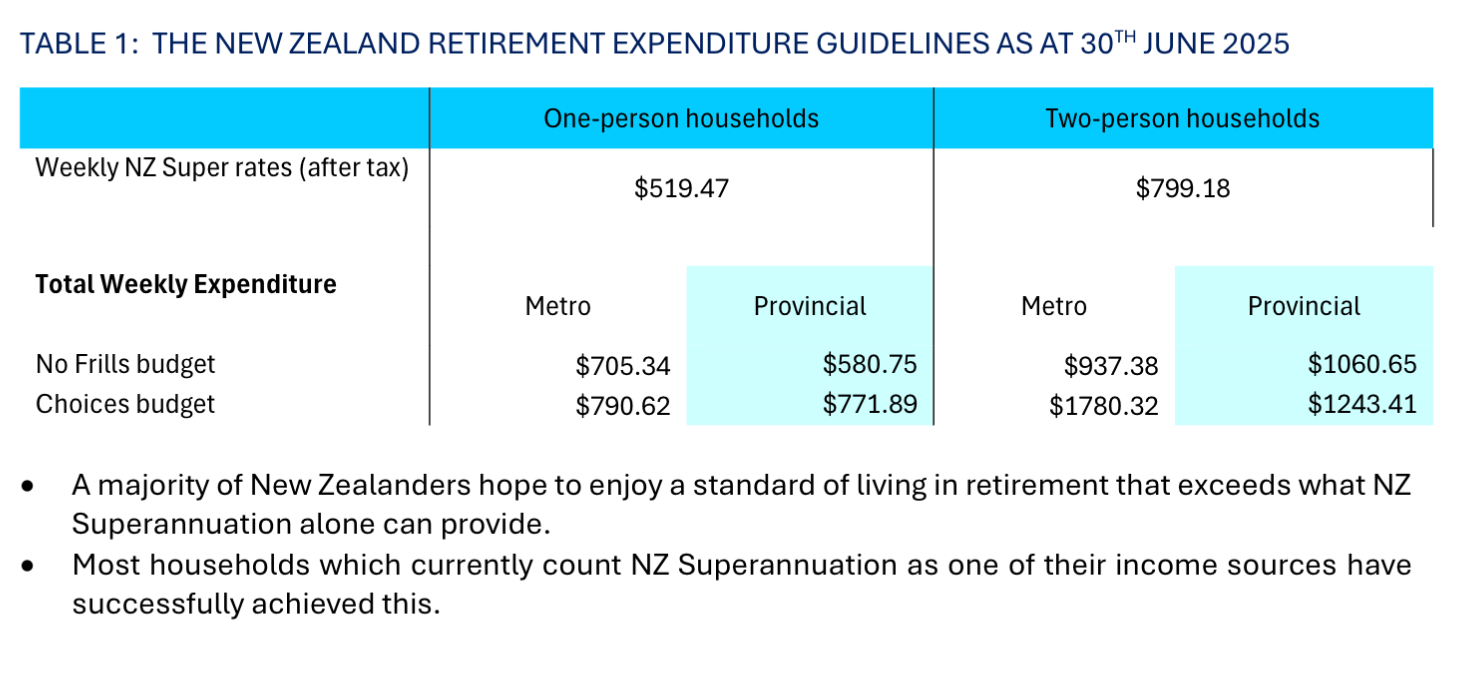
The gap between a basic retirement and a more comfortable lifestyle is substantial.
Someone who enjoys overseas holidays, dining out, hobbies or helping family financially is likely to require significantly more income than NZ Super alone provides.
Is NZ Super Enough?
For most retirees, the report suggests the answer is not on its own.
Even households following the "No Frills" spending pattern generally spend more than they receive from New Zealand Superannuation. According to the report, this reflects the fact that many retirees also draw on KiwiSaver, investments, employment income or other savings.
For example:
- A single person following the Metro No Frills budget spends around $167 per week more than NZ Super provides.
- A couple enjoying a Metro "Choices" lifestyle spend almost $952 per week more than NZ Super alone.
While everyone's situation is different, the report reinforces that many retirees benefit from having additional retirement savings.
Housing Can Make a Big Difference
One of the most interesting additions to this year's report is its focus on housing.
The Guidelines are largely based on today's retirees, many of whom own their homes. However, future retirees are expected to have lower rates of home ownership, making housing costs an increasingly important part of retirement planning.
The report highlights several considerations:
- Homeowners still face ongoing costs such as rates, insurance and maintenance.
- Rates have increased well above general inflation in many parts of New Zealand.
- Those renting in retirement may need considerably more retirement savings to cover ongoing accommodation costs.
- Retirement villages can offer lifestyle benefits, but they also involve entry costs, weekly fees and legal arrangements that should be carefully understood.
Housing is often one of the biggest variables in retirement planning, and it's worth considering well before retirement arrives.
Inflation Continues to Influence Retirement Costs
Although inflation has eased compared with previous years, living costs continue to rise.
The report found retirement spending increased between 2.5% and just over 3% across most household groups over the past year. Some of the biggest contributors included:
- Food
- Property rates
- Household energy
- Recreation and culture
These are everyday expenses that many retirees can't easily avoid, making regular reviews of retirement plans increasingly important.
So, What Does This Mean for Retirement Planning?
Perhaps the biggest takeaway from the report is that retirement planning isn't about aiming for one magic number.
Instead, it's about understanding the lifestyle you'd like to enjoy and estimating what that may cost.
For someone who plans to stay close to home and owns their house mortgage-free, the amount required may look very different from someone expecting to rent or travel extensively throughout retirement.
The earlier you begin thinking about these questions, the more options you're likely to have.
Regularly reviewing your KiwiSaver, other investments and expected retirement income can help ensure your plan continues to reflect both your goals and changing economic conditions.
Conclusion
The 2025 Massey University Retirement Expenditure Guidelines provide a valuable snapshot of what retirement looks like financially for many New Zealanders today. They remind us that while NZ Super remains an important foundation, many retirees rely on additional savings or income to achieve the lifestyle they want.
Perhaps most importantly, the report shows there is no single "right" retirement budget.
Your ideal retirement will depend on where you live, your housing situation, your lifestyle choices and the goals you have for the years ahead.
If you're unsure whether you're on track, using these guidelines as a starting point—and then tailoring them to your own circumstances—can be a helpful first step toward building a retirement plan with greater confidence.

Disclaimer:
This article is intended as general information only and is based on the 2025 New Zealand Retirement Expenditure Guidelines published by Massey University's NZ Fin-Ed Centre. It does not constitute personalised financial advice. Retirement planning should consider your own financial situation, objectives and future needs.
Related Blogs


Let’s Make it Happen
15 minutes is all it takes. We’ll give you clear, fees-free advice so you can get your ducks in a row
